

Application of titanium Target Materials in These 7 Industries
Titanium target is made of high purity titanium material. It has a glossy silver-white appearance, melting point of 1660 ℃, boiling point of 3287 ℃, density of 4.5g/cm3. Titanium was discovered in 1791 by British mineralogist William Gregor.titanium targets have high purity, high density, high strength and corrosion resistance characteristics. High-performance titanium sputtering targets, is to achieve independent development of key materials for electronic information manufacturing and promote the titanium industry to high-end transformation and upgrading of important initiatives. The following is the application of titanium targets in these 7 industries:
1, flat panel display
First of all, let's look at the flat panel display. The technology commonly used in flat panel displays is LCD (liquid crystal display), and titanium sputtering targets play a key role in the manufacture of LCD. This is because LCD is controlled by allowing light to pass through some types of liquid crystals that must have excellent optical properties. Titanium sputtering targets provide a method of manufacturing this type of material. The process of manufacturing this material involves placing the titanium sputtering target in a vacuum chamber and then evaporating the titanium onto a glass substrate through a specific technique. This coating provides special optical properties such as anti-reflection, anti-UV and high transparency, making the screen clearer and brighter.
2, Solar Cells
Solar cell is a device that converts solar energy into electricity. And the main part of the device is the solar panel.titanium sputtering targets can provide some special manufacturing methods to improve the efficiency of solar cells. In this fabrication method, titanium sputtering targets are used to make electrodes for thin film solar cells. This is mainly because titanium sputtering targets not only have excellent chemical stability, but also have excellent electrical conductivity. In this fabrication method, the titanium sputtering target is sputtered on the surface of another material to form a conductive substrate. This provides better electron conductivity and effectively improves the efficiency of solar cells.
3, semiconductor chips
Finally, let's look at the manufacture of semiconductor chips. Semiconductor chips are one of the most important components of modern electronic devices, as they provide electronic components such as transistors, memory and microprocessors for computers and other electronic devices. And the fabrication of semiconductor chips involves several steps, one of which is the fabrication of metal films and electrodes through titanium sputtering targets. Such films and electrodes are typically used to connect and hold tiny semiconductor components together and provide electrical contact. Titanium sputtering targets are used as one of the main materials for electrodes in this process because of its excellent electrical conductivity and chemical stability.
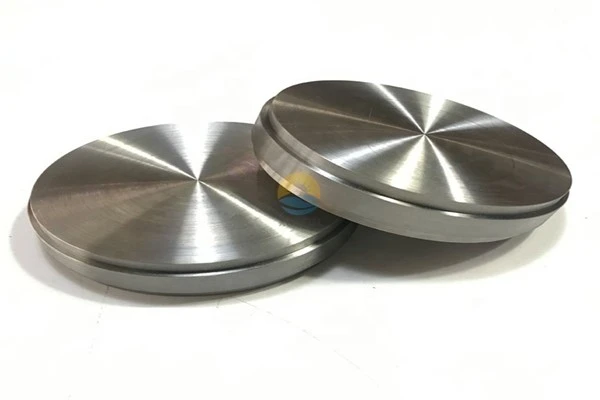
4, Storage field
Titanium sputtering targets are commonly used in the field of magnetic materials for depositing magnetic thin films. The titanium material is used as a base layer for depositing other magnetic materials, such as nickel or cobalt. The resulting thin film structures exhibit excellent magnetic properties, making them ideal for a variety of applications such as data storage, hard disk drives, and magnetic sensors. In addition, titanium sputtering targets are known for their high purity and uniformity, which makes them ideal for the precise and controlled deposition of magnetic thin films.
5, Decorative materials
Titanium sputtering targets can be used to deposit titanium thin films on a variety of substrates to produce decorative metallic luster on architectural surfaces, automotive parts and consumer products.
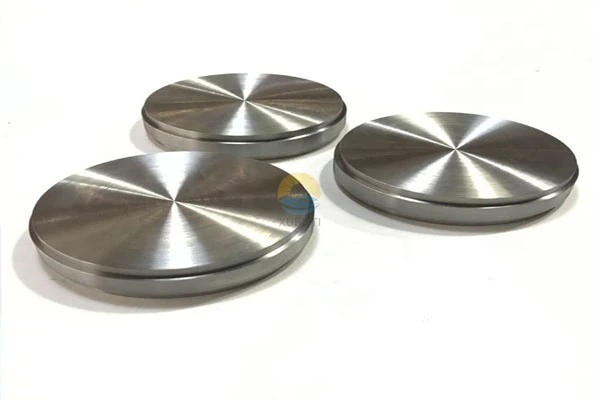
6, Wear-resistant materials
Titanium sputtering targets can be used to produce wear-resistant coatings on a variety of materials, including metals, ceramics and glass. Due to its excellent wear resistance, hardness and low coefficient of friction, it can be used as a coating material. When applied as thin films, titanium coatings increase the durability and service life of the coating material, making it ideal for industrial and mechanical applications. In addition, the use of titanium sputtering targets can improve the overall performance of the coating, including adhesion, uniformity and deposition rate.
Titanium targets are commonly used in high performance thin film preparation technologies such as electron beam physical vapor deposition (EB-PVD) and magnetron sputtering (MS).XUBO needs to adopt the following quality control methods in order to ensure the quality of titanium targets:
1. Material selection: Select high purity titanium metal (purity >99.95%) as raw material to avoid the influence of other impurities.
2. Processing process: Under the premise of choosing suitable process parameters, adopt strict processing process to avoid introducing external pollution.
3. Surface cleaning: Before entering the preparation system, surface cleaning is carried out on the titanium target to avoid the interference of dust and impurities on the target surface to the preparation process.
4. Quality inspection: The prepared titanium target is subjected to quality inspection, including chemical composition inspection, grain size inspection, density inspection, surface quality inspection and temperature rise performance test. Ensure that the titanium target material meets the preparation and use requirements.
5. Packaging protection: after the quality inspection is qualified, adopt suitable packaging method to protect the titanium target material to avoid moisture, oxidation, pollution and other situations.
In short, quality control is an important link in the preparation of titanium targets, xubo only take scientific and effective quality control measures to ensure the preparation of titanium targets with high quality and reliable performance.


