

Why Choose Us
Rich Experience
Shaanxi xubo titanium metal technology Co., Ltd are a professional rare metal manufacturer and supplier for 12 years.we are focused on diversification and have invested heavily in R&D, production and marketing.
High Quality
We adopt advanced production facilities, process standards, and management system to control producing process and obtained ISO:9001 Quality Control System. Our products are certified by world-class companies such as BV CNAS ISO SGS.
Wide Range of Products
Mainly specialized in RD and manufacturing MMO titanium anode, Titanium electrode, Platinised titanium anode, lead oxide anode, CNC metal titanium parts, titanium plate, titanium bar, titanium tube, titanium wire, titanium target, and related titanium products.
Competitive Prices
Our prices are competitive and fair, there are no surprise bills. Any unexpected or additional expenses must be pre-approved by you. That's how our clients are treated.
Refractory metals are a class of metals that are extraordinarily resistant to heat and wear. The expression is mostly used in the context of materials science, metallurgy and engineering. The definition of which elements belong to this group differs. The most common definition includes five elements: two of the fifth period (niobium and molybdenum) and three of the sixth period (tantalum, tungsten, and rhenium). They all share some properties, including a melting point above 2000 °C and high hardness at room temperature. They are chemically inert and have a relatively high density. Their high melting points make powder metallurgy the method of choice for fabricating components from these metals. Some of their applications include tools to work metals at high temperatures, wire filaments, casting molds, and chemical reaction vessels in corrosive environments. Partly due to the high melting point, refractory metals are stable against creep deformation to very high temperatures.


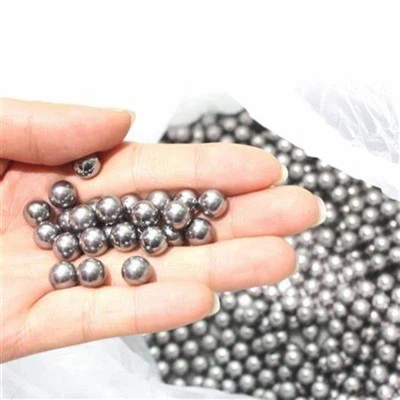



All You Need to Know About Refractory Metals – Properties



● Low-Temperature Brittleness
Refractory metals will not easily crack or break under high temperatures and can bear repeated heating or thermal shock. Tungsten, molybdenum, chromium, and other refractory metals at low temperatures are likely to become brittle while turning into ductile under high-temperature conditions.
Ductile-Brittle transition temperature (DBTT) is an important index for ductility processing and usage of refractory metals. DBTT can be influenced by many factors, like the material's purity, ingredients of alloys, processing methods, and structures. There are two ways to reduce DBTT. One is to add alloy elements in refractory metals.
Rhenium can be added to tungsten. The other way is choosing more reasonable processing methods, like the technology of plastic processing.
● Oxidation Resistance
Refractory metals of high density are very stable at room temperature and not easy to be oxidized in air. However, refractory metals will be rapidly oxidized under high temperatures.
Tungsten and molybdenum begin to oxidize at about 752° F. They will be oxidized and generated respectively into WO3 and MoO3 with the temperature going up. When the temperatures reach 1562°F and 1112°F, the materials will be sublimated markedly. Rhenium starts to oxidize at 572°F and turns into Re2O7 at a temperature of 662°F.
Tantalum and niobium begin to oxidize at the temperatures of 536°F and 392°F. When the temperature is over 932°F, they will generate Ta2O5 and Nb2O5. Titanium and zirconium can be oxidized rapidly at temperatures above 1112℉ to 1292℉. The powder of zirconium and titanium can self-ignite in the air and even can burn with explosions.
In order to fix the oxidation problem, there are two measures. The first one is producing antioxidant alloys and the second one is covering the refractory metals with antioxidant coatings.
● Oxidation Resistance
Tungsten, molybdenum, and rhenium do not react with hydrogen but their oxides can be reduced to the metal with hydrogen at a certain temperature. Tungsten, molybdenum, and rhenium can become brittle when absorbing hydrogen. When the temperature reaches between 572°F to 932°F, those metals will absorb the large quantity of hydrogen and generate brittle metal hydride.
In high vacuum conditions, hydrogen will be released. Therefore, this feature of refractory metals can be used for producing the alloy powder of titanium, zirconium, tantalum, and niobium.
● Corrosion Resistance
Refractory metals have good corrosion resistance. When the temperature is under 302°F, the surface of the tantalum has a dense and stable oxide film. Therefore, the chemical properties of tantalum are very stable.
Tantalum has excellent resistance towards sulfuric acid, hydrochloric acid, nitric acid, phosphoric acid, organic acids, and nitric acid hydrochloride but will be melting in hydrofluoric acid, concentrated alkali solution, and molten base.
The corrosion resistance of niobium is similar to that of tantalum but not as good as Ta. Tungsten is very stable at room temperature in hydrochloric acid, sulfuric acid, nitric acid, hydrofluoric acid, and aqua regia, but it will be easily corroded with sodium nitrate. Molybdenum is similar but not as good as tungsten in corrosion resistance.
In general, tantalum, niobium, titanium, zirconium, and other refractory metals are excellent anti-corrosion materials to work as protective layers.
There are five refractory metals, and each come with varying applications.
Tungsten is the most abundant refractory metal. It has the highest melting point and one of the highest metal densities among refractory metals. It can be very hard when combined with other elements like carbon. It is also highly resistant to corrosion. This metal is widely used in wire filaments, such as those in most of the incandescent lighting used in houses, but it is also common in industrial arc lamps and lighting.
Molybdenum is the most used refractory metal of all because it is less expensive than most others and, when made into an alloy, can be very resistant against creep and high temperatures. It also does not create amalgams, making it corrosion resistant. It is mostly used in strengthening steel alloys, particularly in structural piping and tubing. This metal also has excellent anti-friction qualities, making it an ideal component of oils and greases used in automobiles.
Tantalum is the most resistant against corrosion. It is often used in the field of medicine and surgery as well as in environments where there is high acidity. Tantalum is also the major component of computer and phone circuits or capacitors.
Niobium always comes with another refractory metal, tantalum. It is highly unique and can be worked on easily to obtain high elasticity and strength. It can be used in making electrolytic capacitors and superconductors. Niobium can also be found in nuclear reactors and vacuum tubes.
Rhenium is the most recently discovered refractory metal. It can be found with other metals in ultra-low concentrations. It is also present in other refractory metal ores. This metal is known for its high tensile strength and ductility. It is widely used in nuclear reactors, gyroscopes, and other electric components.
What Are the Refractory Metals
Refractory metals also all have high densities and hardness at room temperature.
Niobium is the least dense of the refractory metals and is the only one that can realistically be annealed. Niobium can be found in aerospace and nuclear reactors.
Molybdenum is mainly used over tungsten when cost is a factor. Molybdenum is cheaper than tungsten but still has comparable properties. It is commonly used as a strengthening alloy in steel.
Tantalum has superior corrosion resistance. It is found most often in the medical field as an allowing element in surgical tooling. Tantalum films can also be found in the capacitors of cell phones.
Rhenium is used in many of the aforementioned applications. It is commonly used as an alloy in other refractory metal alloys, adding ductility and tensile strength.
Tungsten has the highest melting point of all metals at an incredible 3410°C / 6170°F. Tungsten is most commonly known for being used as the filament in incandescent light bulbs. It is also known for its appearance in TIG welding (Tungsten inert gas) where it is used a permanent non-melting electrode.
The Importance of Refractory Metals in Aerospace Design
Refractory Alloys and specifically, Niobium alloys, are becoming increasingly popular for aerospace applications due to their superior properties such as high strength, low weight, and excellent corrosion resistance. There is no doubt that refractory metals can be difficult to process and fabricate, as they have high melting points and tend to be brittle. Because of this, they can be difficult to form or shape into the desired components, which can limit their use in some applications. However, the aerospace and defense industries require the use of refractory metals for a number of reasons:
Refractory metals, such as niobium and tungsten, have high melting points, making them ideal for high-temperature applications. These metals are used in components that are exposed to high temperatures, such as combustion chambers, nozzles, and re-entry vehicles, where they need to maintain their strength and integrity.
Refractory metals have high strength-to-weight ratios, making them ideal for aerospace and defense applications where weight reduction is critical. They are also used in components where high density is needed, such as in counterweights or radiation shielding.
Refractory metals, such as molybdenum, have excellent corrosion resistance, making them ideal for use in corrosive environments. This is particularly important in aerospace and defense applications, where components are exposed to harsh conditions, such as high altitude, high humidity, and high temperatures.
Refractory metals, such as tungsten, have excellent wear resistance, making them ideal for applications where high wear and abrasion resistance are required. This is important in aerospace and defense applications, where components are exposed to high-stress environments and need to maintain their performance over time.

Refractory metals are extremely heat-resistant since they have a high melting point. They only expand slightly at high temperatures and have high strength. Refractory metals are very resistant to corrosion and have good electrical and thermal conductivity. In addition, they reliably shield X-ray- and gamma radiation.
Why Use Refractory Metals in Thermocouples
High temperature resistance: The primary characteristic of refractory metals is their ability to retain strength and stability at temperatures where most other metals would melt or significantly degrade.
Corrosion resistance: Many refractory metals exhibit excellent resistance to corrosion, making them suitable for chemical processing environments.
High density: Most refractory metals have a high density, which contributes to their durability and wear resistance.
High melting points: The defining feature of refractory metals is their exceptionally high melting points, which make them indispensable in industries such as aerospace, defense, and nuclear energy.
Refractory metals are indispensable in applications that demand materials capable of withstanding extreme conditions. Their unique properties enable advancements in technology and industry, particularly in areas subjected to the highest temperatures and most challenging environments.
Shaanxi xubo titanium metal technology Co., Ltd is mainly specialized in RD and manufacturing MMO titanium anode, Titanium electrode, Platinised titanium anode, lead oxide anode, CNC metal titanium parts, titanium plate, titanium bar, titanium tube, titanium wire, titanium target, and related titanium products. Which are widely used in water treatment, swimming pools, electrolysis, disinfection, the alkali industry, electroplating, cathodic protection, medical, chemical, sport, aerospace, etc. It is located in"China Titanium Valley" Baoji city, we adopt advanced production facilities, process standards, and management system to control producing process and obtained ISO:9001 Quality Control System Most our products are widely exported to Brazil, Argentina, and USA, Germany, Korea, Vietnam, France, Italy, etc more than 50 countries. Our objective is "To make better Titanium Solutions for your usage"We strive to provide more perfect and cost-effective titanium solutions for global partners.
We are a professional rare metal producer and supplier for many years. Our products are certified by world-class companies such as BV CNAS ISO SGS, our vision is to enlarge the profits and make our clients satisfied.


Our Certificates

FAQ
As one of the leading refractory metal manufacturers and suppliers in China, we warmly welcome you to buy or wholesale cheap refractory metal in stock here from our factory. All customized products are with high quality and competitive price.
Astm F67 Titanium Sheet, Mmo Coated Titanium Mesh Water Sanitation, Titanium Alloy Spacer Flange