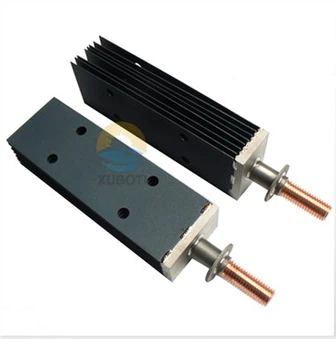
Nickel rod welding process
Nickel rod welding, also known as nickel electrode welding or nickel alloy welding, is a process that involves the use of a specialized nickel-based electrode to join two or more pieces of metal together. This welding technique is often used in the aerospace, nuclear, chemical, and petrochemical industries due to the high strength and corrosion-resistant properties of the nickel alloy.

1、Basic requirements of nickel rod welding processes
For nickel rod welding, in order to ensure that the composition of the nickel rod remains unchanged during the welding process, it is generally necessary to use tungsten argon tig welding for self-melting welding. The author has welded and processed a total length of 3m for a metallurgical enterprise, with one or two weld joints of nickel bars. Due to the large cross-section and mass of the nickel bar, it is required to weld with a large depth of fusion to prevent the connection part from falling off as a whole during the electroslag smelting process due to insufficient strength of the weld, which leads to interruption of the smelting process.
2, the physical properties of nickel and weldability
The chemical activity of nickel is low, and the oxide film generated at the beginning of oxidation can prevent further oxidation of nickel. Therefore, the protection of the weld and heat-affected zone during welding is not very demanding, the flow of shielding gas can be selected according to the flow of mild steel welding. The physical properties of nickel and iron are close to each other, but the liquid fluidity of nickel is poor. Due to the large size of the welded parts, resulting in fast cooling rate, and the welding process for the quality of the weld tissue no special requirements, so you can use a larger welding parameters for welding.
3, nickel bar welding joint processing and grouping
Before welding the nickel bar, the casting end needs to be properly processed, because nickel is very expensive, generally do not cut the head processing, only the end of the flying edge with a hammer to knock flat or melt with an electric arc to ensure that the gap between the joints within 5mm. Select two nickel rods with the same cross-section for grouping, you can put two nickel rods on a regular 50mm x 50mm angle for positioning welding first to ensure concentricity.
4、Welding equipment and process parameters
Initially, the equipment used is NSA-300-1 type tungsten arc welding machine. Table 1 displays the welding process parameters.
Welding process parameters
|
Welding current I/A |
Arc voltage U/V |
Tungsten electrode diameter d1/mm |
Nozzle diameter d2/mm |
Argon gas flow Q/(L.min-1) |
| 280 | 18-20 | 4.0 | 12 | 12 |
At this time, the weld penetration generally reaches 3 to 4mm, for the gap of less than 2mm joint the welding process parameters can basically meet the requirements. Filler metal is required when greater than 3mm from the edge of the nickel rod to the middle, thus requiring greater welding process parameters.
The filler metal of pure nickel rod is pure nickel wire, and the filler metal of nickel alloy is nickel alloy wire,Nickel alloys are normally welded in the solid solution treated condition. If the alloys and precipitation hardened (PH) alloy has undergone any operations that would introduce high residual stresses, it should be annealed prior to welding.At the same time, the use of solid solution strengthened technology in the nickel bar welding process can significantly improve the mechanical properties and anti-wear properties of the welded joints and increase the service life of nickel alloys.
Since the equipment was already running at full capacity, it was not possible to increase the current. For this reason, two welding machines were used in parallel. Since tungsten arc welding uses a positive DC connection, a DC rectifier welder with a no-load voltage close to the external characteristics of the welder is connected in parallel to the power output of the tungsten arc welding machine, so that the required welding current value can be achieved by adjusting the output current of the DC welder. In this case, the welding parameters of 350A welding current and 20V arc voltage were used to successfully weld the large gap seam.
During operation, the speed and temperature of the welding process should be well controlled to prevent excessive heat treatment from damaging the material.
5.submerged arc welding
Submerged arc welding is a welding process that uses pneumatic or mechanical equipment to automatically feed a welding rod under an arc while using a melting wire to melt the surface of the work piece and form a joint. This welding process is characterized by the ability to weld on larger thicknesses of workpieces with higher weld quality and resistance to corrosion and high temperatures, and is therefore widely used in welding work in ship construction, marine development, chemical and electric power industries. In the nickel rod welding process of submerged arc welding, the welding process should maintain sufficient arc energy, control the welding speed and current, while selecting the appropriate welding materials to ensure the quality of welding.
6.In order to avoid stress corrosion cracking, the following points need to be noted when welding:
1. Selection of suitable welding materials: Nickel-rich alloys or corrosion-resistant steels and other materials with high corrosion resistance should be selected for welding.
2. Reasonable preheating and welding temperature: preheating temperature and welding temperature should be reasonably selected according to the characteristics of the material and thickness, should not be too high or too low, in order to avoid excessive thermal stress.
3. Reduce the transition welding temperature and welding speed: Properly reduce the welding transition temperature and welding speed to help reduce thermal stress.
4. Control the welding sequence: According to the shape and structure of the welded parts and other characteristics, use the appropriate welding sequence to avoid excessive thermal stresses in the welding process.
5. Proper post-heat treatment: According to the nature of the material, proper post-heat treatment after welding to relieve thermal stresses can effectively prevent stress corrosion cracking.