

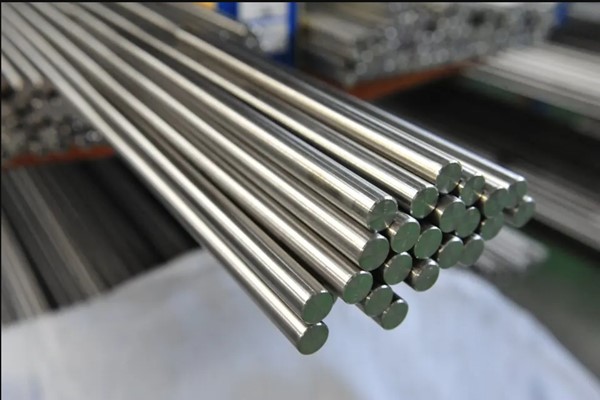
Dental implants with titanium bar
"Titanium, which looks like steel and has a silver-gray luster, is a transition metal and has been considered a rare metal for some time in the past. However, it is not a rare metal, accounting for about 0.42% of the total weight in the earth's crust is 16 times the total of copper, nickel, lead and zinc. It ranks seventh in the world of metals and contains as many as 70 kinds of minerals. Titanium has high strength, low density, high hardness, high melting point and high corrosion resistance; high purity titanium has good plasticity, but becomes brittle and hard when impurities are present."
Titanium and titanium alloys have developed into the main medical metal materials for the production and manufacture of surgical implants and orthopedic devices worldwide, in addition to its low modulus of elasticity, good toughness, and lasting stability, the most important thing is that titanium and titanium alloys have far better biocompatibility than CoCr or stainless steel. This makes titanium and titanium alloys more compatible with the physiological and mechanical environment of the human skeletal hard tissues after implantation into the alveolar bone.
The human organism is a complex environment, and the implanted material is under the influence of a complex environment of physical, chemical, biological, electrical and mechanical factors for a long time, and is not only subject to the dynamic action of the constant movement of the tissue, but also to the metabolic reactions of the body. Any implant should not cause chemical changes among cells, blood and various organs in human tissues, as well as allergic and inflammatory reactions, or foreign body rejection of the implant by the human body, etc. At the same time, as a surgical implant also requires implanted medical materials in the long-term physiological environment with good mechanical compatibility, that is, with sufficient strength, toughness and appropriate elastic modulus, as well as a high degree of stability (corrosion and wear resistance) and lasting durability (fatigue and fracture), etc..

Advantages of titanium for dental implant applications
1. Moderate hardness
The specific gravity of titanium is small, it is 1/4 of gold alloy and 1/2 of cobalt-chromium alloy, so the weight of the denture made of pure titanium will be much lighter, which can reduce the burden of the remaining tissues in the mouth, and at the same time has a better comfort.
The crown made of pure titanium is between enamel and dentin, so it will not wear the natural teeth in the opposite jaw too much. The use of pure titanium for pins in the root allows for a more physiological pattern of stress transfer in the root, reducing the risk of root fracture.
3、Low thermal conductivity
Crowns made of pure titanium are better insulated from hot and cold stimuli, which helps to protect the pulp and prevent soreness when eating too cold or too hot food.
4、No taste interference
Titanium metal has good stability, there will be no metal taste sensation in the mouth and no taste disturbance.
5、X-ray permeable
Titanium is semi-transmissive to X-rays, so when you wear a crown made of pure titanium, you can check whether there is caries inside the crown when taking X-rays, so that early detection and early treatment can be achieved, which is an advantage that other metal materials used for denture making do not have.
6、Better magnetic resonance compatibility
Titanium is a non-paramagnetic metal, compared with the commonly used cobalt-chromium alloy and nickel-chromium alloy, it produces minimal artifacts when doing magnetic resonance examination and has little effect on magnetic resonance examination. In most cases, it is not necessary to remove the pure titanium denture during the head MRI examination.
Stability of dental implants
Metals in the oral environment are prone to corrosion, which can reduce the strength of the restoration, affect the aesthetics, damage tissue cells, and even lead to allergies, cancer and other systemic effects. When metals enter the body and come into contact with body fluids, they will absorb oxygen, oxidize and ionize. Oxidation causes the outermost layers of metal atoms to change, detach from each other, and continue to affect the next layer of metal atoms, repeating the release process of metal ionization. These metal ions are unstable and to re-establish stability, these metal ions bind to the host protein. Our bodily functions perceive this metalloprotein complex as a foreign invasive antigen, which triggers a response from the immune system to combat the invader. What we call stainless steel in our daily lives actually oxidizes. However, titanium and titanium alloys are in a passivated state in air and electrolyte solutions due to the presence of an oxide film, which makes titanium far more resistant to corrosion than other metals in different electrolyte solutions. Titanium and its alloys have a stable oxidized surface that avoids the process of ionization release of the metal, thus avoiding the immune reaction from our organism and allowing the artificial tooth roots prepared from titanium to function stably.
Dental implants are a restorative method for missing teeth. The appearance of teeth restored by dental implants is very close to the real teeth, with a strong practicality, and the chewing function is restored similar to the real teeth, and it lasts for a long time.


